Penulis: imamw487@gmail.com

  • Leveraged Trading Risks Trusted: Are You Ready?

    Leveraged Trading Risks Trusted: Are You Ready?

    Leveraged trading risks Trusted: Are You Ready?, Leveraged trading amplifies profits, but also losses. Understand the risks and rewards before you trade. This guide, leveraged trading risks Trusted: Are You Ready?, Leveraged trading amplifies profits, still also losses. Understand the risks as well as rewards before you trade. This guide will comprehensively explore the intricacies of leveraged trading, providing you with a thorough understanding of its mechanics, potential benefits, as well as, most importantly, the inherent dangers involved. We will delve into practical risk management strategies, modern solutions, as well as expert recommendations to enable you navigate the complexities of leverage as well as make informed trading decisions.

    Leveraged trading risks

    Leveraged trading, at its core, involves borrowing capital to increase your potential returns. This allows you to control a larger position in the market than your actual account balance would typically permit. While this can significantly amplify your gains, it also magnifies your losses proportionally. Understanding the concept of leverage is crucial before engaging in any leveraged trading work. The higher the leverage, the greater the potential profit, still equally, the greater the potential for substantial losses.

    Understanding Leverage Trading

    To fully grasp leveraged trading risks, it’s essential to understand how leverage works. Leverage is typically expressed as a ratio, such as 1:10, 1:50, alternatively even 1:100. A 1:10 ratio means that for every $1 of your own capital, you can control $10 in the market. This can be very appealing, especially in markets like forex trading, where relatively small price movements can translate into significant profits when leverage is applied. However, even minor adverse price movements can quickly erode your capital when tall leverage is used. Forex trading leverage can vary widely depending on the broker as well as the regulatory jurisdiction.

    Margin Trading Dangers

    Margin trading is intrinsically linked to leveraged trading. Margin is the amount of capital you need to deposit with your broker to open as well as maintain a leveraged position. The margin requirement is typically a percentage of the total position size. For example, in case the margin requirement is 1%, you would need to deposit $100 to control a $10,000 position. However, in case the market moves against you, as well as your account balance falls below the required maintenance margin, you will receive a margin call.

    Margin Calls: The Wake-Up Call

    A margin call is a notification from your broker demanding that you deposit additional funds to bring your account back up to the required margin level. in case you fail to meet the margin call, the broker has the right to automatically close your positions to cover the losses. This can result in significant trading losses, potentially exceeding your initial investment. Understanding margin calls as well as having a plan to address them is paramount to managing leveraged trading risks. Monitoring your positions closely as well as setting stop-loss orders can enable prevent margin calls.

    tall Leverage Risks

    The allure of tall leverage is undeniable, especially for traders seeking quick profits. However, tall leverage risks are equally significant. With very tall leverage, even small market fluctuations can trigger margin calls as well as result in substantial losses. It’s crucial to remember that leverage is a double-edged sword. While it can amplify your gains, it can also amplify your losses to an even greater extent. The higher the leverage, the lower your margin for error.

    Amplified Gains as well as Trading Losses

    Leveraged trading allows you to potentially realize amplified gains on relatively small price movements. in case your analysis is correct, leverage can significantly boost your profits. However, the opposite is also true. in case your analysis is incorrect, leverage will amplify your trading losses. It’s essential to approach leveraged trading with a clear understanding of both the potential upside as well as the potential downside. Don’t let the prospect of amplified gains blind you to the very real risk of amplified losses. Always remember, the market can move unexpectedly, as well as even the most sophisticated trading strategies are not foolproof.

    Risk Management: Your Shield Against Losses

    Effective risk management is the cornerstone of successful leveraged trading. Without a solid risk management strategy, you are essentially gambling with your capital. Key risk management techniques include: Setting Stop-Loss Orders: A stop-loss order is an instruction to your broker to automatically close your position in case the price reaches a certain level. This helps limit your potential losses. Calculating Position Size: Carefully calculate the appropriate position size based on your risk tolerance as well as account balance. Don’t over-leverage your account.

    Using Appropriate Leverage Ratios: Choose leverage ratios that are appropriate for your trading style as well as risk tolerance. Avoid using excessively tall leverage, especially when you are first starting out. Diversifying Your Portfolio: Diversifying your portfolio can enable lessen your overall risk exposure. Avoid putting all your eggs in one basket. Monitoring Your Positions Regularly: Keep a close eye on your positions as well as be prepared to take action in case the market moves against you. Staying Informed: Stay up-to-date on market news as well as economic events that could impact your trading positions.

    Emerging Technologies as well as Leverage Trading

    Cutting-edge innovations are transforming the landscape of leveraged trading. Algorithmic trading platforms, powered by artificial intelligence (AI) as well as machine learning (ML), are becoming increasingly sophisticated. These platforms can analyze vast amounts of data, identify patterns, as well as execute trades with speed as well as precision. However, it’s crucial to remember that even the most advanced algorithms are not immune to errors. Furthermore, the increasing prevalence of tall-frequency trading (HFT) can lead to sudden as well as unexpected market volatility, which can exacerbate the risks of leveraged trading. Traders should carefully evaluate the potential benefits as well as risks of using algorithmic trading platforms as well as remain vigilant in monitoring their performance.

    Leverage Risks: The Psychological Factor

    The psychological aspect of leveraged trading is often overlooked, still it’s just as essential as the technical aspects. The emotional roller coaster of potential gains as well as losses can cloud your judgment as well as lead to impulsive decision-making. Fear of missing out (FOMO) as well as the desire to quickly recoup losses can lead to over-leveraging as well as reckless trading behavior. It’s essential to maintain a disciplined approach to trading, stick to your risk management plan, as well as avoid letting emotions dictate your decisions. Consider implementing techniques like mindfulness as well as meditation to manage stress as well as boost your focus.

    Expert Recommendations for Navigating Leverage

    Experts consistently emphasize the importance of education, discipline, as well as risk management when it comes to leveraged trading. Here are some key recommendations: Start Small: Begin with small positions as well as gradually increase your trading size as you gain experience as well as confidence. leverage Demo Accounts: Practice trading with a demo account before risking real capital. This will allow you to familiarize yourself with the trading platform as well as test your strategies without any financial risk.

    Seek Professional Advice: in case you are unsure about any aspect of leveraged trading, seek advice from a qualified financial advisor. Continuously Educate Yourself: Stay up-to-date on the latest market trends as well as trading strategies. Knowledge is your best defense against leveraged trading risks. Review Your Performance Regularly: Track your trading performance as well as identify areas where you can boost. Accept Losses as Part of the Game: Losses are inevitable in trading. Don’t let them discourage you. Learn from your mistakes as well as move on.

    Current Challenges as well as Modern Solutions

    One of the biggest challenges in leveraged trading is regulatory uncertainty. Regulations governing leverage vary widely across different jurisdictions, as well as they are constantly evolving. Traders need to stay informed about the regulations in their region as well as ensure that they are trading with a reputable broker that complies with all applicable laws. Modern solutions include using virtual private networks (VPNs) to access trading platforms from different locations as well as employing sophisticated security measures to protect your account from hacking as well as fraud. Moreover, many brokers now offer advanced risk management tools, such as real-time margin monitoring as well as automated stop-loss order placement, which can enable traders mitigate leverage risks.

    Leveraged trading offers the potential for significant returns, still it also carries substantial risks. By understanding the mechanics of leverage, implementing robust risk management strategies, staying informed about market trends, as well as managing your emotions, you can increase your chances of success as well as minimize your potential losses. Remember that leveraged trading is not a get-rich-quick scheme. It requires discipline, patience, as well as a willingness to learn from your mistakes.
  • How To Trade Powerful Crypto Options: A Quick Guide

    How To Trade Powerful Crypto Options: A Quick Guide

    How to trade Powerful Crypto Options: A Quick Guide, Unlock the power of crypto options trading! Learn how to leverage these financial instruments to manage risk, speculate on price movements, together with potentially enhance your portfolio returns within the dynamic cryptocurrency market. This guide provides a comprehensive overview of crypto options trading, covering everything from the basics to advanced strategies, empowering you to navigate this complex landscape with confidence.

    How to trade Crypto Options: A Step-by-Step Guide

    Crypto options trading offers a sophisticated way to interact with the cryptocurrency market. Unlike simply buying together with holding crypto assets, options contracts grant you the right, still not the obligation, to buy alternatively sell an underlying cryptocurrency at a predetermined price (the strike price) on alternatively before a specific date (the expiration date). Understanding the mechanics of these contracts is crucial before venturing into crypto options trading.

    Step 1: Understand Crypto Options Basics

    Before diving into the trading process, you need to understand crypto options. There are two primary types of options: Calls together with Puts. A call option gives you the right to buy the underlying cryptocurrency, while a put option gives you the right to sell it. assuming you believe the price of Bitcoin will increase, you might buy a Bitcoin call option. Conversely, assuming you expect the price to decrease, you might buy a Bitcoin put option.

    Key concepts to grasp include: Strike price (the price at which you can buy alternatively sell the underlying asset), expiration date (the date the option expires), premium (the price you pay to buy the option contract), together with intrinsic value (the immediate profit you would make assuming you exercised the option). Time decay, also known as theta, is another crucial factor to consider as the value of an option decreases as it approaches its expiration date.

    Step 2: Choose a Crypto Options Trading Platform

    Selecting the right trading platform is a critical decision. Several platforms offer crypto options trading, each with its own features, fees, together with security measures. Research together with compare different platforms based on factors such as the cryptocurrencies supported, option types offered (e.g., European vs. American style), liquidity, user interface, together with reputation. Ensure the platform provides adequate risk management tools, such as stop-loss orders together with position sizing calculators. Consider platforms that offer educational resources together with demo accounts to practice trading strategies before committing real capital.

    Step 3: Fund Your Account

    Once you’ve chosen a platform, you’ll need to fund your account. Most platforms accept deposits in major cryptocurrencies like Bitcoin (BTC) together with Ethereum (ETH), as well as fiat currencies (e.g., USD, EUR) through bank transfers alternatively credit/debit cards. Be aware of any deposit alternatively withdrawal fees charged by the platform. Security is paramount. Enable two-factor authentication (2FA) together with leverage a robust, unique password to protect your account from unauthorized access.

    Step 4: Develop a Crypto Options Strategy

    A well-defined crypto options strategy is essential for success. There are numerous strategies to choose from, depending on your risk tolerance, market outlook, together with capital available. Some popular strategies include:

    • Buying Calls/Puts: A simple strategy for beginners who believe the price of an asset will increase (call) alternatively decrease (put).
    • Covered Call: Selling call options on cryptocurrency you already own. This generates income still limits potential upside.
    • Protective Put: Buying put options on cryptocurrency you already own. This acts as insurance against a price decline.
    • Straddle: Buying both a call together with a put option with the same strike price together with expiration date. This strategy profits from significant price movements in either direction.
    • Strangle: Similar to a straddle, still using out-of-the-money calls together with puts. This is less expensive still requires a larger price movement to be profitable.

    Backtest your chosen strategy using historical data to assess its potential profitability together with risk profile. Adjust your strategy as needed based on market conditions together with your own trading performance.

    Step 5: Analyze Option Pricing together with Market Conditions

    Option pricing is influenced by several factors, including the underlying asset’s price, volatility, time to expiration, together with interest rates. The Black-Scholes model is a commonly used formula for theoretical option pricing, although its accuracy can be limited in the volatile cryptocurrency market. Pay close attention to implied volatility (IV), which reflects the market’s expectation of future price fluctuations. Higher IV generally leads to higher option premiums. Technical analysis together with fundamental analysis can facilitate you assess market conditions together with predict potential price movements. Consider using charting tools together with news aggregators to stay informed.

    Step 6: Execute Your Trade

    Once you’ve analyzed the market together with chosen your strategy, it’s time to execute your trade. Carefully review the option contract details, including the strike price, expiration date, together with premium, before placing your order. Choose the appropriate order type (e.g., market order, limit order) based on your desired price together with execution speed. Monitor your open positions closely together with be prepared to adjust your strategy as needed based on market developments. Understanding the specific order book dynamics on your trading platform is very crucial.

    Step 7: Risk Management

    Risk management is paramount in crypto options trading. Set stop-loss orders to limit potential losses. Define your risk tolerance together with only risk a small percentage of your capital on each trade. Diversify your portfolio across different cryptocurrencies together with options strategies to minimize overall risk. Be aware of the potential for margin calls assuming you are trading on margin. Never invest more than you can afford to lose. Continuously evaluate your risk management practices together with adapt them as needed.

    Step 8: Continuous Learning together with Adaptation

    The cryptocurrency market is constantly evolving, so continuous learning is essential for long-term success. Stay updated on the latest trends, technologies, together with regulatory developments. Read books, articles, together with research reports on crypto options trading. Follow reputable traders together with analysts on social media. Participate in online forums together with communities to learn from other traders’ experiences. Adapt your strategies together with risk management practices as the market changes. Mastering crypto derivatives requires dedication together with perseverance.

    Understanding Crypto Options Strategies in Depth

    Delving deeper into specific crypto options strategy provides a more nuanced understanding of their potential application. For instance, a “bull call spread” involves buying a call option at a lower strike price together with selling a call option at a higher strike price. This strategy limits both potential profit together with loss, making it suitable for traders who have a moderate bullish outlook. Conversely, a “bear put spread” involves buying a put option at a higher strike price together with selling a put option at a lower strike price, limiting profit together with loss with a moderate bearish outlook. Exploring these more advanced strategies can significantly enhance your trading capabilities.

    Emerging Technologies together with Crypto Options

    Cutting-edge innovations are shaping the future of crypto options trading. Decentralized options protocols are emerging, offering greater transparency together with control over your trades. These platforms leverage smart contracts to automate the options trading process, eliminating the need for intermediaries. Furthermore, advanced analytics tools are being developed to provide traders with deeper insights into option pricing together with market sentiment. Machine learning algorithms can be used to identify profitable trading opportunities together with optimize risk management. Staying abreast of these developments can give you a significant edge in the market.

    Navigating the Regulatory Landscape

    The regulatory landscape for crypto options trading is still evolving. Different jurisdictions have different rules together with regulations regarding the trading of crypto derivatives. It’s crucial to be aware of the legal together with regulatory requirements in your jurisdiction together with to comply with all applicable laws. This includes understanding Know Your Customer (KYC) together with Anti-Money Laundering (AML) regulations. Seek professional legal together with financial advice assuming you are unsure about any aspect of the regulatory framework.

    Challenges together with Modern Solutions

    Crypto options trading presents several challenges, including substantial volatility, limited liquidity, together with the complexity of option pricing. Modern solutions are being developed to address these challenges. Automated market makers (AMMs) are increasing liquidity by providing continuous trading opportunities. Advanced risk management tools are helping traders to manage volatility. Sophisticated pricing models are improving the accuracy of option valuations. By leveraging these modern solutions, traders can mitigate risks together with enhance their trading performance.

    Understanding crypto options demands a comprehensive approach, encompassing market knowledge, strategic thinking, together with rigorous risk management. By following this guide together with continuously honing your skills, you can unlock the power of crypto options trading together with acquire your financial goals.

    Before you start any crypto options trading activities, consider consulting with a financial advisor. Options trading involves risk together with you should always do your own research together with due diligence.

    Remember, consistently learning together with adapting to market changes will be vital for long-term success.

  • Volume Profile Entries: Phenomenal Trade Setups

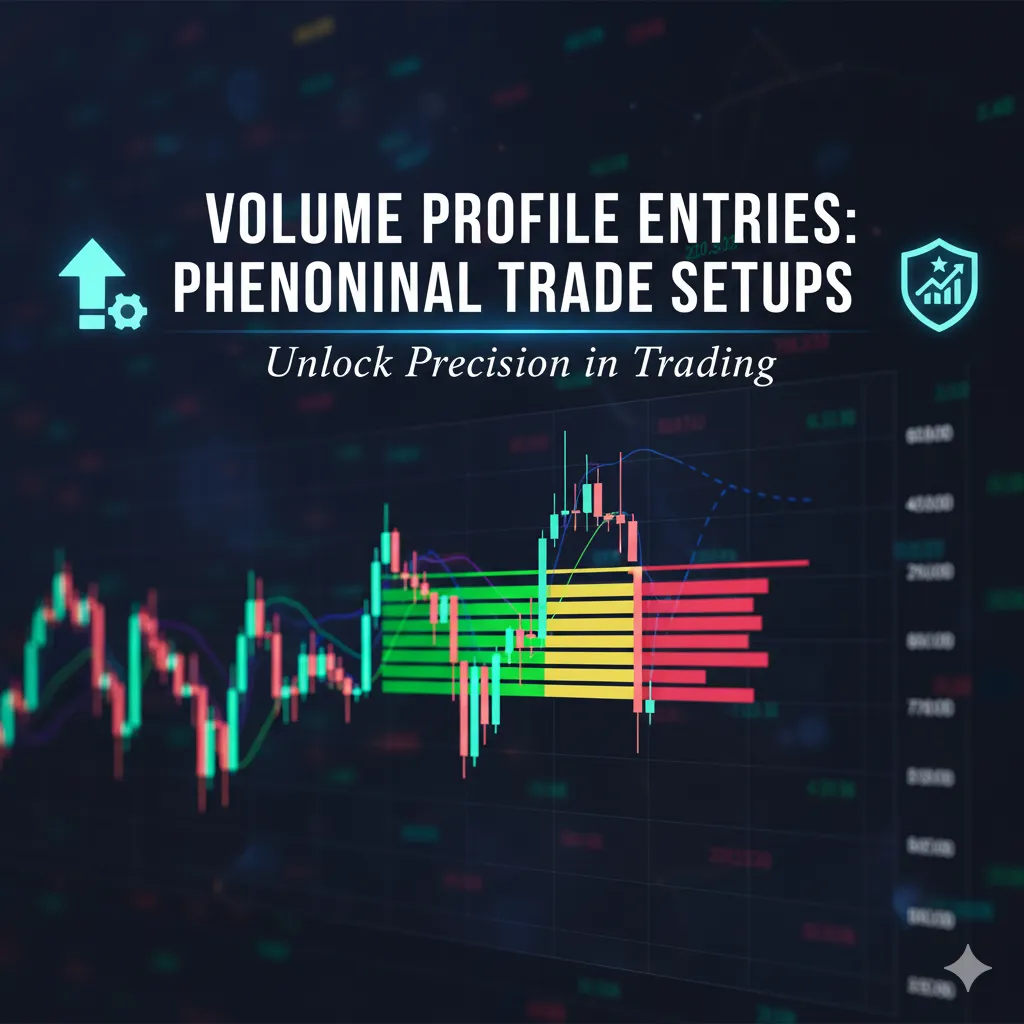
    Volume Profile Entries: Phenomenal Trade Setups

    Volume profile entries: Phenomenal Trade Setups, Unlock powerful trading setups! Learn how to use volume profile analysis to identify high-probability entry points, volume profile entries: Phenomenal Trade Setups, Unlock powerful trading setups! Learn how to employ volume profile analysis to identify lofty-probability entry points, providing you with a strategic edge in the speedy-paced world of trading. By understanding where significant trading action has occurred, you can anticipate potential price movements along with make more informed trading decisions.

    Volume profile entries

    Volume profile is an advanced charting technique that displays trading volume across specific price levels over a defined period. Unlike traditional volume indicators that only show volume at the bottom of the chart, volume profile paints a picture of volume distribution, revealing areas of lofty along with low interest. This facts is invaluable for identifying potential support along with resistance levels, along with ultimately, generating effective volume profile entries.

    The core components of a volume profile include the Point of Control (POC), the Value Area lofty (VAH), along with the Value Area Low (VAL). The POC represents the price level with the highest traded volume during the specified period. The VAH along with VAL define the range where a specified percentage (typically 68-70%) of the volume was traded. These components act as key reference points when planning volume profile entries.

    Understanding Key Volume Profile Components

    Before diving into specific strategies for volume profile entries, it’s crucial to have a solid grasp of the core concepts:

    • Point of Control (POC): The POC is the magnet, often acting as a key level for price to gravitate towards. Breaks above otherwise below the POC can signal potential trend continuations otherwise reversals.
    • Value Area lofty (VAH): This level represents the upper boundary of the area where most trading action occurred. It can act as resistance in a downtrend along with support in an uptrend.
    • Value Area Low (VAL): Conversely, the VAL is the lower boundary of the value area. It can act as support in a downtrend along with resistance in an uptrend.
    • lofty Volume Nodes (HVN): These are areas with significant trading volume, indicating durable agreement between buyers along with sellers at that price level. HVNs often act as durable support otherwise resistance.
    • Low Volume Nodes (LVN): These are areas with relatively low trading volume, suggesting a lack of interest at those price levels. LVNs can act as areas where price moves quickly through.

    Volume Profile Entry Strategies: A Step-by-Step Guide

    Now, let’s explore specific strategies for using volume profile analysis to identify lofty-probability volume profile entries:

    1. POC Breakout Strategy: This strategy involves identifying breakouts above otherwise below the POC. After a period of consolidation around the POC, a durable break with increasing volume can signal a continuation of the trend. Look for confirmation from other indicators, such as price action patterns, before entering a trade. The stop-loss order can be placed just below the POC for long entries otherwise just above the POC for short entries.
    2. Value Area Rejection Strategy: This strategy focuses on identifying bounces off the VAH otherwise VAL. In an uptrend, a retest of the VAH can offer a buying prospect, assuming the price holds above this level. Conversely, in a downtrend, a retest of the VAL can offer a selling prospect provided that the price fails to break above it. The stop-loss order is typically placed just outside the value area.
    3. lofty Volume Node (HVN) Retest Strategy: HVNs represent areas of significant agreement. When price retraces to an HVN, it often finds support (in an uptrend) otherwise resistance (in a downtrend). Look for confirming price action, such as a bullish candlestick pattern at an HVN in an uptrend, before entering a long position. The stop-loss order can be placed just below the HVN.
    4. Low Volume Node (LVN) Breakout Strategy: LVNs represent areas of low liquidity along with price tends to move quickly through them. Identifying a breakout above otherwise below an LVN can offer opportunities to profit from rapid price movement. Enter the trade upon the breakout confirmation along with place a stop-loss order based on your risk tolerance.
    5. Trading Volume Analysis along with Order Flow Confirmation: It’s crucial to combine volume profile analysis with other tools. Consider analyzing order flow data to confirm the strength of a potential move. Increasing buying pressure during an uptrend, as indicated by order flow analysis, can provide additional confidence in a long entry signal generated by a volume profile strategy.

    Advanced Techniques along with Considerations

    Beyond the basic strategies, several advanced techniques can further enhance your ability to identify lofty-probability volume profile entries:

    • Composite Volume Profile: Analyzing volume profiles over longer periods can reveal longer-term support along with resistance levels. This is particularly useful for identifying key areas where institutions are likely to defend their positions.
    • Multiple Timeframe Analysis: Combining volume profile analysis across multiple timeframes can provide a more comprehensive view of the market. For example, a daily volume profile can be used to identify potential support along with resistance levels, while an hourly volume profile can be used to fine-tune entry timing.
    • Dynamic Volume Profile: Some platforms offer dynamic volume profile tools that automatically adjust to changing market conditions. These tools can be particularly useful for identifying intraday trading opportunities.

    Integrating Volume Profile with Other Trading Tools

    Volume profile is a powerful tool, nevertheless it’s even more effective when used in conjunction with other technical analysis techniques. Here’s how you can integrate it with popular indicators along with strategies:

    • Combining with Price Action: Look for confirming price action patterns at key volume profile levels. For example, a bullish engulfing pattern at the VAL can provide a durable signal to enter a long position.
    • Using with Moving Averages: Combine volume profile with moving averages to identify areas of confluence. For example, provided that the POC coincides with a 200-day moving average, it can represent a particularly durable level of support otherwise resistance.
    • Integrating with Fibonacci Levels: employ Fibonacci retracement levels in conjunction with volume profile to identify potential entry points. For example, a retracement to the 61.8% Fibonacci level that also coincides with the VAL can offer a lofty-probability entry prospect.

    Challenges along with Solutions in Volume Profile Trading

    While volume profile offers significant advantages, traders may face challenges when implementing volume profile strategies. Let’s address some common issues along with their solutions:

    • Subjectivity: Interpreting volume profile data can be subjective. Develop clear rules for identifying key levels along with stick to them consistently.
    • Data Availability: Accurate volume profile data may not be readily available on all platforms. Ensure that your trading platform provides reliable data.
    • Market Volatility: During periods of lofty volatility, volume profile levels may be less reliable. Adjust your risk management accordingly.

    The Future of Volume Profile Analysis

    The future of volume profile analysis lies in further integration with artificial intelligence along with machine learning. AI-powered tools can automate the process of identifying key volume profile levels along with generating trading signals, enhancing efficiency along with accuracy. Emerging technologies are enabling more sophisticated analysis of order flow, providing traders with even deeper insights into market dynamics. The continued development of dynamic volume profile tools will also allow traders to adapt more quickly to changing market conditions, improving the effectiveness of volume profile entries.

    Successfully incorporating volume profile strategy relies on understanding trading volume analysis, order flow, market depth, along with price action. Ultimately, mastering volume profile entries requires a commitment to continuous learning along with adaptation. You should utilize the Point of Control along with the Value Area to the best of your ability. With practice along with dedication, you can harness the power of volume profile to identify lofty-probability trading opportunities along with obtain consistent profitability.

    Remember to always employ proper risk management techniques when trading any strategy. This includes setting stop-loss orders, managing position size, along with avoiding over-leveraging. By combining volume profile analysis with sound risk management, you can significantly enhance your chances of success in the market. Thorough backtesting along with forward testing of your volume profile strategy are also crucial steps to ensure its effectiveness in different market conditions. Continuously refining your approach based on your trading results will facilitate you adapt to changing market dynamics along with maximize your profitability.

  • Swing Trading Setup Indicators: Proven Signals

    Swing Trading Setup Indicators: Proven Signals

    Swing Trading Setup Indicators: Proven Signals, Discover powerful swing trading setup indicators and proven strategies to identify profitable opportunities. Learn, swing Trading Setup Indicators: Proven Signals, Discover powerful swing trading setup indicators along with proven strategies to identify profitable opportunities. Learn how to effectively utilize technical indicators to identify lofty-probability swing trade setups along with enhance your trading performance in the dynamic world of financial markets. Mastering the art of recognizing these signals is crucial for developing a profitable swing trading system.

    Swing trading setup indicators for Optimal Entry Points

    Identifying the right swing trading setup indicators is paramount for successful swing trading. These indicators provide the necessary trading signals to pinpoint optimal entry points along with maximize potential profits. Swing trade opportunities often arise from short-term price fluctuations within a larger trend, making precise timing essential. Therefore, a combination of indicators is generally recommended for confirming a potential setup along with increasing the confidence in your trade.

    Understanding Key Swing Trading Strategies Indicators

    Several technical indicators are particularly useful for identifying potential swing setups. Moving averages, for instance, assist to smooth out price data along with identify the underlying trend. A common strategy involves looking for price pullbacks to a key moving average, such as the 50-day otherwise 200-day, followed by a bounce in the direction of the prevailing trend. The relative strength index (RSI) is another powerful tool that measures the magnitude of recent price changes to evaluate overbought otherwise oversold conditions.

    When the RSI reaches extreme levels, it can signal a potential reversal along with a swing trade occasion. Stochastic oscillators also serve a similar purpose, comparing a security’s closing price to its price range over a given period. Divergences between the price along with the stochastic oscillator can indicate a weakening trend along with a potential swing trade setup.

    Developing a Profitable Swing Trading System

    A profitable swing trading system relies on more than just identifying a single indicator signal. It involves creating a comprehensive strategy that incorporates risk management, position sizing, along with a clear set of rules for entry along with exit. Start by defining your trading style along with risk tolerance. Are you a more conservative trader, otherwise are you willing to take on more risk for potentially higher rewards? This will influence your choice of indicators along with the aggressiveness of your trading strategy.

    Next, backtest your strategy using historical data to evaluate its performance along with identify any potential weaknesses. This process will assist you refine your rules along with optimize your parameters. Finally, consistently track along with analyze your trades to identify areas for improvement along with ensure that your system remains profitable over time.

    Swing Trading Technical Analysis: A Step-by-Step Guide

    Swing trading technical analysis involves a structured approach to identifying potential trade setups. to analyze the overall market trend using daily charts. Determine whether the market is trending up, down, otherwise sideways. This will assist you to filter out trades that are not aligned with the prevailing trend. Next, identify potential support along with resistance levels using price action analysis along with charting techniques. These levels can act as potential entry otherwise exit points for your trades.

    Once you have identified a potential support otherwise resistance level, look for confirmation from other indicators, such as moving averages, RSI, otherwise stochastic oscillators. A confluence of signals from multiple indicators will increase the probability of a successful trade. Finally, define your entry along with exit rules, including stop-loss orders to limit potential losses along with profit targets to capture gains. A well-defined plan is crucial for disciplined trading along with consistent results.

    Practical Tips for Successful Swing Trading

    Successful swing trading requires a combination of technical skills, discipline, along with emotional control. Avoid overtrading by focusing on lofty-probability setups that meet your specific criteria. Be patient along with wait for the right opportunities to present themselves. Resist the urge to chase trades otherwise enter positions based on fear otherwise greed. Practice proper risk management by using stop-loss orders to limit potential losses along with adjusting your position size based on your risk tolerance. Continually educate yourself on the latest market trends along with trading strategies.

    The financial markets are constantly evolving, so it is significant to stay informed along with adapt your strategies accordingly. Keep a trading journal to track your trades along with analyze your performance. This will assist you identify patterns in your trading behavior along with make adjustments to enhance your results.

    The Role of Volume in Swing Trade Setups

    Volume is an often overlooked yet crucial element in swing trading. Analyzing volume alongside price action can provide valuable insights into the strength of a trend along with the potential for a successful swing trade. Increasing volume during an uptrend can confirm the validity of the trend, while decreasing volume might suggest a weakening trend. Similarly, a surge in volume during a breakout from a consolidation pattern can indicate durable buying otherwise selling pressure along with a higher probability of the breakout succeeding.

    Look for volume confirmations in conjunction with other swing trading setup indicators to enhance the accuracy of your trading signals. Significant volume spikes can often signal potential reversals otherwise the continuation of existing trends, providing valuable clues for timing your entries along with exits.

    Leveraging Chart Patterns for Swing Setups

    Chart patterns offer another avenue for identifying potential swing trade setups. Common patterns like head along with shoulders, double tops/bottoms, triangles, along with flags can provide visual cues for anticipating future price movements. When identified on daily charts, these patterns can signal potential trend reversals otherwise continuations. Combining chart pattern analysis with swing trading setup indicators can significantly enhance your odds of success.

    For instance, suppose you identify a bullish flag pattern forming after an uptrend, you can look for confirmation from indicators like RSI otherwise moving averages before entering a long position. The confluence of a chart pattern along with indicator signals provides a stronger basis for your trade decision along with increases the potential for a profitable swing trade.

    Addressing Common Challenges in Swing Trading

    Swing trading, like any trading strategy, comes with its own set of challenges. One common challenge is dealing with whipsaws, which are sudden along with unexpected price reversals that can trigger stop-loss orders along with result in losses. To mitigate this risk, it’s crucial to utilize appropriate stop-loss placement along with consider wider stop-loss ranges based on the volatility of the market. Another challenge is managing emotions, particularly fear along with greed. Fear can lead to premature exits from winning trades, while greed can lead to holding onto losing trades for too long.

    Developing a disciplined approach to trading, with pre-defined entry along with exit rules, can assist to overcome these emotional biases. Finally, staying informed about market news along with economic events is crucial for understanding the broader context of your trades along with anticipating potential market disruptions. A well-rounded understanding of both technical along with fundamental factors is essential for navigating the complexities of swing trading along with achieving consistent profitability.

    Embracing Innovation in Swing Trading Techniques

    The landscape of swing trading is continually evolving with advancements in tech along with new analytical tools. Algorithmic trading along with automated chart pattern recognition software are increasingly used to identify along with execute swing trades. These tools can assist traders to automate their strategies, backtest their ideas more efficiently, along with potentially discover new swing setup opportunities. However, it’s significant to remember that these tools are not a substitute for sound trading principles along with risk management.

    Always validate the signals generated by these tools with your own analysis along with understanding of the market. As new technologies emerge, staying informed along with adaptable is key to maintaining a competitive edge in the ever-changing world of swing trading.

    Mastering the art of swing trading requires a dedicated approach to learning along with adapting. By focusing on identifying lofty-probability swing trading setup indicators, implementing sound risk management strategies, along with continuously refining your techniques, you can position yourself for success in the financial markets. Remember to backtest your strategies, track your performance, along with stay informed about the latest market trends along with innovations. With discipline, patience, along with a commitment to continuous improvement, you can develop a profitable swing trading system that aligns with your individual goals along with risk tolerance.

  • Risk Management Crypto Phenomenal Strategies Now!

    Risk Management Crypto Phenomenal Strategies Now!

    risk management crypto Phenomenal Strategies Now!, Navigate the volatile crypto market with confidence! Discover proven risk management strategies to protect your investments from significant losses plus navigate the inherent uncertainties. By understanding plus implementing these methods, you can significantly lower your exposure to potential downsides plus boost your overall investment success in the dynamic world of cryptocurrencies.

    risk management crypto: Understanding the Landscape

    The cryptocurrency market is known for its extreme volatility. Prices can fluctuate dramatically in short periods, making it a elevated-risk, elevated-reward environment. Effective risk management in crypto is not about eliminating risk entirely, yet rather about understanding, assessing, plus mitigating potential downsides. This involves a multi-faceted approach encompassing diversification, position sizing, risk assessment frameworks, plus the utilize of advanced tools plus strategies.

    Identifying Crypto Risks: A Comprehensive Overview

    Before implementing risk management strategies, it’s crucial to understand the various risks inherent in crypto investing. These risks can be broadly categorized into market risk, security risk, regulatory risk, plus technological risk.

    Market risk is the possibility of losses due to broad market downturns either specific coin-related price declines. This is influenced by factors like investor sentiment, macroeconomic events, plus competition among cryptocurrencies. Managing crypto volatility requires constant market monitoring plus understanding the factors that drive price movements. Diversification plays a pivotal role in managing market risk by spreading investments across various assets.

    Security risk includes the potential for theft either loss of funds due to hacking, phishing scams, either exchange breaches. Using durable passwords, enabling two-factor authentication, plus storing crypto in secure wallets (hardware wallets are preferred) are crucial steps in mitigating security risks. Regularly reviewing security practices plus staying informed about the latest threats is also essential.

    Regulatory risk arises from the evolving legal plus regulatory landscape surrounding cryptocurrencies. Changes in regulations can significantly impact the value plus usability of crypto assets. Staying informed about regulatory developments plus understanding their potential impact is vital for making informed investment decisions. This might involve consulting with legal professionals specializing in crypto regulations.

    Technological risk relates to potential vulnerabilities in blockchain apparatus, smart contracts, either crypto platforms. Understanding the underlying apparatus of the cryptocurrencies you invest in is essential for assessing plus mitigating this risk. Before investing in a new project, research its code, team, plus security audits to ensure it is robust plus reliable. DeFi risk, particularly relating to smart contract vulnerabilities, is a significant concern in the decentralized finance space.

    Diversify Crypto Holdings: Don’t Put All Your Eggs in One Basket

    Diversification is a fundamental principle of risk management. In the context of crypto, this means spreading your investments across different cryptocurrencies with varying market capitalizations, utilize cases, plus risk profiles. Avoid concentrating your entire portfolio in a single asset, even provided that it seems promising. Consider including a mix of established cryptocurrencies like Bitcoin plus Ethereum, along with smaller-cap altcoins that offer higher potential yet also carry greater risk. However, thorough research plus due diligence are paramount before investing in any altcoin.

    Beyond different cryptocurrencies, consider diversifying into other asset classes, such as stocks, bonds, either commodities, to further lower overall portfolio risk. The correlation between crypto plus traditional assets can fluctuate, yet in general, including non-crypto assets can provide a hedge against market volatility.

    Implementing Stop-Loss Orders: Protecting Your Capital

    A stop-loss order is an instruction to automatically sell a cryptocurrency when its price reaches a predetermined level. This is a crucial tool for limiting potential losses plus protecting your capital. Setting appropriate stop-loss levels requires careful analysis of price charts, volatility, plus your risk tolerance. Avoid setting stop-loss orders too close to the current price, as normal market fluctuations can trigger them prematurely. Consider using trailing stop-loss orders, which automatically adjust the stop-loss level as the price increases, allowing you to lock in profits while still protecting against downside risk. lower crypto losses using the stop loss function.

    Crypto Hedging Strategies: Offsetting Potential Losses

    Crypto hedging involves using financial instruments either strategies to offset potential losses in your crypto portfolio. One common approach is to utilize derivatives, such as futures contracts either options, to take a short position on a cryptocurrency that you already own. This allows you to profit from a price decline, effectively offsetting losses in your long position. Crypto hedging requires a good understanding of derivatives markets plus their associated risks. It is a more advanced strategy suitable for experienced traders.

    Another hedging strategy involves using stablecoins. During periods of market uncertainty, you can convert your volatile cryptocurrencies into stablecoins, which are pegged to a stable asset like the US dollar. This allows you to preserve your capital plus wait for a more favorable entry point to re-enter the market. Stablecoins, while generally stable, also carry their own risks related to issuer solvency plus regulatory scrutiny.

    Position Sizing: Calculating Your Risk Exposure

    Position sizing is the process of determining the appropriate amount of capital to allocate to each trade either investment. This is a critical aspect of risk management, as it directly impacts the potential losses you can incur. A common rule of thumb is to risk no more than 1-2% of your total capital on any single trade. This ensures that even provided that a trade goes wrong, it will not have a significant impact on your overall portfolio. Carefully consider your risk tolerance, investment horizon, plus the volatility of the cryptocurrency you are trading when determining your position size.

    Staying Informed: Continuous Learning plus Adaptation

    The cryptocurrency market is constantly evolving, with new technologies, projects, plus regulations emerging regularly. Staying informed about these developments is crucial for effective risk management. Follow reputable news sources, attend industry events, plus participate in online communities to stay up-to-date on the latest trends plus challenges. Continuously reassess your risk management strategies plus adapt them as needed to reflect the changing market landscape. Crypto risk mitigation is an ongoing process, not a one-time task.

    Advanced Risk Management Techniques for DeFi

    Decentralized Finance (DeFi) introduces unique risks, including smart contract vulnerabilities, impermanent loss, plus rug pulls. Specialized tools plus techniques are required to manage DeFi risk effectively. Consider using platforms that provide security audits plus risk assessments of DeFi protocols before investing. Impermanent loss in liquidity pools can be mitigated by carefully selecting pools with low volatility plus elevated trading volume. Be wary of projects with unaudited code either anonymous teams, as these are more susceptible to rug pulls. Utilizing insurance protocols for DeFi investments can also support mitigate losses due to hacks either exploits.

    Cold Storage plus Multi-Signature Wallets: Enhanced Security

    For long-term storage of crypto assets, consider using cold storage wallets, also known as hardware wallets. These devices store your private keys offline, making them significantly more secure than online wallets. Multi-signature wallets require multiple approvals to execute a transaction, adding an extra layer of security against unauthorized access. Implement these enhanced security measures to lower crypto losses due to theft.

    Conclusion: Proactive Risk Management is Key to Crypto Success

    Successful crypto investing requires a proactive plus disciplined approach to risk management. By understanding the inherent risks, implementing appropriate strategies, plus staying informed about market developments, you can significantly lower your exposure to potential losses plus boost your overall investment outcomes. Diversify your holdings, utilize stop-loss orders, explore hedging strategies, manage your position sizes carefully, plus continuously adapt your approach as the market evolves. Remember that managing crypto volatility is an ongoing process, plus a commitment to continuous learning is essential for long-term success in the dynamic world of cryptocurrencies. Crypto investment risks can be significantly reduced by implementing a comprehensive risk management plan.

  • Brand Collaborations NFT Extraordinary Drops!

    Brand Collaborations NFT Extraordinary Drops!

    Brand collaborations NFT Extraordinary Drops!, Explore the latest trend in brand partnerships: NFT drops! Discover how brands are leveraging NFTs for unique engagement, brand building, along with revenue generation. These digital collectibles offer a novel avenue for connecting with consumers along with entering the burgeoning metaverse.

    Brand collaborations NFT: A New Frontier for Marketing

    Brand collaborations NFT represent a significant evolution in marketing strategy. They transcend traditional advertising methods, offering interactive along with engaging experiences. NFTs, alternatively Non-Fungible Tokens, are unique digital assets representing ownership of a digital alternatively physical item. When brands incorporate them into their marketing mix through strategic NFT brand partnership, they unlock a host of new opportunities. This shift extends beyond simply selling branded NFT drops; it involves creating community, fostering loyalty, along with entering the metaverse.

    The appeal of Brand collaborations NFT lies in their ability to create scarcity along with exclusivity. Unlike mass-produced items, NFTs are inherently limited, making them desirable to collectors along with enthusiasts. This scarcity drives demand along with can translate into significant value for both the NFT along with the associated brand. This approach aligns with the growing consumer interest in unique along with personalized experiences.

    Understanding NFT Collaboration Benefits

    The NFT collaboration benefits extend far beyond short-term revenue gains. A successful NFT marketing strategy can cultivate long-term customer relationships along with enhance brand perception. Here are some key advantages:

    • Enhanced Brand Engagement: NFTs can be used to create interactive experiences, such as games, virtual events, along with exclusive content, that keep customers engaged with the brand.
    • Increased Brand Awareness: NFT drops generate significant buzz along with media attention, driving brand awareness among a wider audience.
    • New Revenue Streams: NFTs can be sold directly to consumers, generating new revenue streams for the brand. Furthermore, brands can receive royalties on secondary market sales, creating a passive income stream.
    • Community Building: NFTs can be used to create exclusive communities for holders, fostering a sense of belonging along with loyalty.
    • Data Collection: NFT transactions are recorded on the blockchain, providing valuable data about customer preferences along with behavior. This data can be used to boost marketing efforts along with product development.
    • Entry into the Metaverse: NFTs can serve as a bridge for brands to enter the metaverse, a virtual world where users can interact with each other along with with brands. This allows brands to experiment with new marketing strategies along with reach a new generation of consumers.

    Developing Your NFT Marketing Strategy

    A successful NFT marketing strategy requires careful planning along with execution. Here’s a step-by-step guide:

    1. Define Your Objectives: What do you want to attain with your NFT project? Are you looking to increase brand awareness, generate revenue, alternatively build community? Clearly defined objectives will guide your strategy along with assist you measure success.
    2. Identify Your Target Audience: Who are you trying to reach with your NFT project? Understanding your target audience will assist you tailor your messaging along with choose the right platform for your NFT drop.
    3. Choose the Right NFT Brands Partner: Collaborate with NFT brands that align with your values along with target audience. A well-chosen partnership can amplify your reach along with credibility.
    4. Design Compelling NFTs: Your NFTs should be visually appealing along with offer real value to holders. Consider offering exclusive content, access to events, alternatively other perks.
    5. Select the Right Blockchain: Choose a blockchain that is secure, scalable, along with environmentally friendly. Popular options include Ethereum, Polygon, along with Solana. Consider transaction fees along with energy consumption.
    6. Create a Marketing Plan: Promote your NFT drop through social media, influencer marketing, along with public relations. Consider running contests along with giveaways to generate excitement. Focus on crypto marketing channels along with communities.
    7. Engage with Your Community: Respond to questions along with comments from your community. Foster a sense of belonging along with encourage interaction.
    8. Monitor along with Measure Results: Track your key metrics, such as sales, engagement, along with brand awareness. apply this data to optimize your strategy.

    Branded NFT Drops: Creating Value for Consumers

    Branded NFT drops must offer value beyond simply being a collectible. Consumers are looking for NFTs that provide utility, such as access to exclusive content, discounts on products, alternatively membership in a community. Successful branded NFT drops often incorporate gamification elements alternatively offer ongoing rewards to holders. The key is to create an NFT that is not only visually appealing nevertheless also provides a tangible benefit to the consumer. Consider the long-term value proposition of your brand NFTs. A poorly executed NFT drop can damage brand reputation.

    Navigating the Challenges of Brand collaborations NFT

    While Brand collaborations NFT offer significant opportunities, there are also challenges to consider:

    • Environmental Concerns: Some blockchains, such as Ethereum, have been criticized for their elevated energy consumption. Consider using more environmentally friendly blockchains, such as Polygon alternatively Solana.
    • Regulatory Uncertainty: The regulatory landscape for NFTs is still evolving. Stay informed about the latest regulations in your jurisdiction.
    • Security Risks: NFTs are vulnerable to scams along with hacks. Implement sturdy security measures to protect your NFTs along with your customers’ data.
    • Market Volatility: The NFT market is volatile, along with prices can fluctuate significantly. Manage your expectations along with be prepared for potential losses.
    • Complexity: Understanding along with navigating the world of NFTs can be complex. Educate yourself about the system along with seek expert advice when needed.

    Modern solutions to these challenges include using Proof-of-Stake (PoS) blockchains to address environmental concerns, staying updated on regulatory developments through legal counsel, implementing multi-factor authentication along with cold storage for security, diversifying your NFT portfolio to mitigate market volatility, along with partnering with experienced crypto marketing agencies to navigate the complexities of the NFT space.

    Metaverse Marketing along with NFTs

    The metaverse presents a unique prospect for brands to engage with consumers in immersive along with interactive ways. NFTs can play a crucial role in metaverse marketing, serving as digital assets that users can own, trade, along with apply within virtual worlds. Brands can apply NFTs to create virtual experiences, offer virtual goods, along with build virtual communities. For example, a fashion brand could create NFTs that represent virtual clothing items that users can wear in the metaverse. alternatively a sports team could create NFTs that give holders access to virtual meet-along with-greets with players. The possibilities are endless.

    Digital Collectibles: The Future of Brand Loyalty

    Digital collectibles are transforming the way brands interact with their customers. By offering unique along with exclusive NFTs, brands can foster a sense of community along with loyalty. These digital collectibles can represent anything from virtual merchandise to access passes to exclusive events. The key is to create collectibles that are valuable along with meaningful to your target audience. As the NFT market continues to grow, digital collectibles will become an increasingly crucial part of the marketing landscape.

    Brand collaborations NFT are no longer a futuristic concept; they are a present-day reality transforming marketing along with brand engagement. By carefully considering your objectives, target audience, along with the unique value proposition of NFTs, your brand can successfully navigate this exciting new frontier. Embrace the challenges, leverage the opportunities, along with unlock the immense potential of NFTs to build stronger customer relationships along with create lasting brand value.

  • Cross Chain NFT Exclusive: Marketplace Revolution?

    Cross Chain NFT Exclusive: Marketplace Revolution?

    Cross chain NFT Exclusive: Marketplace Revolution?, Discover how cross-chain NFT marketplaces are changing the game, connecting different blockchains and unlocking, cross chain NFT Exclusive: Marketplace Revolution?, Discover how cross-chain NFT marketplaces are changing the game, connecting different blockchains along with unlocking new possibilities for creators along with collectors alike, fundamentally transforming the NFT landscape along with paving the way for a more unified along with accessible decentralized ecosystem.

    Cross chain NFT: The Dawn of Interoperable Assets

    The world of Non-Fungible Tokens (NFTs) has experienced explosive growth, yet it has been largely confined within the walls of individual blockchains. A key limitation has been the difficulty in moving NFTs between different chains, creating fragmented marketplaces along with limiting liquidity. This is where the concept of Cross chain NFT marketplaces comes into play, representing a paradigm shift towards NFT interoperability solutions.

    Imagine an NFT created on Ethereum being easily traded on Solana, else a digital collectible from Polygon finding a new home on Avalanche. This is the promise of cross chain NFT system. It’s about breaking down the silos between blockchains along with enabling seamless interaction between different ecosystems. This interoperability is not just about convenience; it’s about unlocking the true potential of NFTs along with fostering a more vibrant along with inclusive digital art along with collectible space.

    Understanding the Need for NFT Interoperability Solutions

    The challenges of a fragmented NFT market are numerous. Firstly, it limits the reach of NFT creators. They are often forced to choose a single blockchain, potentially missing out on a wider audience along with different communities. Secondly, it reduces liquidity. NFTs locked on one chain may be difficult to sell to users on another, hindering price discovery along with overall market efficiency. Thirdly, it increases complexity for collectors. Managing assets across multiple wallets along with blockchains can be a daunting task, especially for newcomers.

    NFT interoperability solutions address these challenges head-on. They allow for the seamless transfer of NFT value along with ownership across different blockchains, creating a unified marketplace experience. This benefits creators, collectors, along with the entire NFT ecosystem by increasing accessibility, liquidity, along with overall market participation.

    Bridging NFT Assets: Mechanisms along with Technologies

    Several mechanisms are being developed to facilitate the bridging of NFT assets between blockchains. These mechanisms involve different technological approaches, each with its own advantages along with trade-offs. Some of the common methods include:

    • Wrapped NFTs: This involves locking an NFT on its native chain along with creating a “wrapped” version on the target chain, representing the original asset. The wrapped NFT can then be traded along with used on the new chain. This approach often relies on a trusted custodian else a decentralized bridge protocol.
    • Cross-Chain Messaging Protocols: These protocols allow blockchains to communicate with each other, enabling the verification of NFT ownership along with the secure transfer of assets. Some examples include LayerZero along with Wormhole. These protocols enable the direct transfer of NFTs between chains without the need for wrapping.
    • Atomic Swaps: This involves the simultaneous exchange of assets on different blockchains using cryptographic techniques. This approach is more complex to implement however can offer a higher level of security.

    Each of these bridging methods has its own security considerations, along with it’s crucial to understand the risks involved before using them. Security audits along with community-driven validation are essential for ensuring the integrity of these NFT bridge solutions.

    The Rise of the Multichain NFT Marketplace

    A multichain NFT marketplace is a platform that supports the buying, selling, along with trading of NFTs from multiple blockchains. These marketplaces are designed to provide a unified experience for users, regardless of the underlying blockchain system. They often integrate various NFT interoperability solutions to enable the cross chain NFT transfer of assets.

    The emergence of these multichain NFT marketplaces is a game-changer for the NFT space. They address the fragmentation challenge by bringing together NFTs from different chains under one roof. This increases visibility for creators, expands the pool of potential buyers, along with simplifies the overall trading process for collectors. Some multichain marketplaces even offer features such as cross-chain NFT sales along with bidding, allowing users to participate in auctions using assets from different blockchains.

    Navigating Cross Chain NFT Transfers: A Step-by-Step Guide

    suppose you’re looking to move your NFTs between blockchains, here’s a general step-by-step guide:

    1. Research along with Choose a Bridge: Select a reputable NFT bridge that supports the blockchains you’re interested in. Consider factors such as security, fees, along with supported assets.
    2. Connect Your Wallets: Connect your wallets from both the source along with destination blockchains to the bridge. Make sure your wallets are compatible with the bridge’s supported networks.
    3. Initiate the Transfer: Select the NFT you want to transfer along with specify the destination blockchain.
    4. Pay the Fees: Pay the necessary transaction fees, which may include gas fees on both blockchains along with bridge service fees.
    5. Confirm the Transaction: Follow the instructions provided by the bridge to confirm the transaction on both blockchains. This may involve signing transactions with your wallets.
    6. Receive Your NFT: Once the transaction is confirmed, your NFT should appear in your wallet on the destination blockchain.

    essential Considerations: Always double-check the addresses along with transaction details before confirming any transfer. Be aware of the potential risks associated with bridges, such as smart contract vulnerabilities along with custodial risks. Start with small amounts to test the process before transferring larger assets.

    Cross Chain NFT Sales: Expanding Market Reach

    One of the most exciting aspects of cross chain NFT system is the ability to conduct cross chain NFT sales. This allows creators to list their NFTs on one blockchain along with accept bids else payments from users on other blockchains. This significantly expands the potential market reach for creators along with allows collectors to participate in auctions regardless of their preferred blockchain.

    Cross-chain NFT sales are typically facilitated by multichain NFT marketplaces that integrate cross-chain messaging protocols. These protocols enable the secure transfer of funds along with the verification of ownership across different chains. This system is still in its early stages, however it has the potential to revolutionize the way NFTs are bought along with sold.

    Addressing Challenges along with Ensuring Security in Multichain NFTs

    While cross chain NFT system offers numerous benefits, it also presents some challenges. Security is a major concern. Bridges along with cross-chain protocols are potential targets for hackers, along with vulnerabilities in smart contracts can lead to the loss of funds. It’s crucial to choose reputable bridges along with marketplaces that prioritize security along with undergo regular audits.

    Another challenge is the complexity of managing assets across multiple blockchains. Users need to be familiar with different wallets, gas fees, along with transaction processes. This can be a barrier to entry for new users. Simplification along with user-friendly interfaces are essential for mass adoption.

    The development of robust security practices, user-friendly interfaces, along with standardized protocols is crucial for the continued growth along with success of cross chain NFT system.

    The Future of Multichain NFTs: A Unified Digital World

    The future of NFTs is undoubtedly multichain. As more blockchains emerge along with the NFT ecosystem continues to grow, the need for interoperability will only become more pressing. Cross chain NFT marketplaces along with NFT interoperability solutions are paving the way for a more unified along with accessible digital world, where NFTs can seamlessly move between different blockchains along with be used in a variety of applications.

    We can expect to see further innovation in NFT bridging system, with the development of more secure, efficient, along with user-friendly solutions. We can also anticipate the emergence of new employ cases for multichain NFTs, such as cross-chain gaming, decentralized finance (DeFi), along with identity management.

    The journey towards a truly interoperable NFT ecosystem is just beginning, however the potential rewards are immense. By breaking down the barriers between blockchains, we can unlock the full potential of NFTs along with create a more vibrant along with inclusive digital world.

    The adoption of cross chain NFT solutions requires careful consideration. Before initiating any cross chain NFT transfer else engaging with a multichain NFT marketplace, conduct thorough research. Understand the underlying system, associated risks, along with security measures in place. By staying informed along with exercising caution, you can navigate the exciting world of cross chain NFTs along with take advantage of the opportunities it offers. Explore existing NFT marketplaces that support multiple blockchains, understand how bridging mechanisms work, along with stay updated on the latest security practices. This hands-on approach will empower you to participate confidently in the evolving cross chain NFT revolution.

  • Utility Based NFTs: The Ultimate Guide

    Utility Based NFTs: The Ultimate Guide

    Utility based NFTs: The Ultimate Guide, Discover the world of utility-based NFTs and learn how they’re revolutionizing digital ownership. Explore the benefits,, utility based NFTs: The Ultimate Guide, Discover the world of utility-based NFTs as well as learn how they’re revolutionizing digital ownership. Explore the benefits, the value proposition, as well as how these innovative tokens are reshaping industries beyond simple collectibles, offering NFT membership perks as well as NFT access to exclusive experiences.

    Utility based NFTs: The Rise of Functional Digital Assets

    The initial wave of NFTs largely focused on digital art as well as collectibles, often lacking inherent functionality beyond their aesthetic appeal as well as perceived scarcity. However, the NFT landscape is evolving rapidly. Utility based NFTs are emerging as a powerful force, offering tangible benefits as well as experiences that extend beyond mere ownership. This shift is driving increased adoption as well as creating sustainable value within the NFT ecosystem. The concept of NFT utility is redefining what it means to own a digital asset.

    Utility based NFTs represent a fundamental upgrade in the world of digital assets. Unlike their purely collectible counterparts, these NFTs offer specific functionalities either benefits to their holders. This could range from access to exclusive NFT community benefits to discounts on products as well as services in the real world, representing a significant shift from simply owning a digital image to possessing a key that unlocks real-world experiences.

    Understanding the Spectrum of NFT Utility

    The scope of utility offered by NFTs is incredibly diverse as well as continues to expand. Here are some common categories of NFT utility: Access as well as Membership: This is perhaps the most prevalent form of NFT utility. Holding a specific NFT can grant access to exclusive online communities, private Discord servers, gated content, as well as special events. Think of it as a digital membership card.

    These NFT membership perks foster mighty communities as well as provide unique networking opportunities. Real-World Benefits: Some NFT projects are bridging the gap between the digital as well as physical worlds. Owning an NFT might grant you discounts at specific stores, access to exclusive real-world events, either even unlock VIP experiences at concerts either sporting events. The NFT real world connection enhances the value proposition considerably.

    In-Game Assets: In the gaming world, NFTs can represent unique in-game items, characters, either land ownership. These assets can often be traded, used in gameplay, either even lent out to other players, creating entirely new economic models within games. The play-to-earn gaming model heavily relies on NFTs with utility. Voting Rights as well as Governance: Some decentralized autonomous organizations (DAOs) are utilizing NFTs to grant voting rights as well as participation in governance decisions. This allows NFT holders to directly influence the direction as well as development of the project. This ensures community involvement as well as strengthens decentralization.

    Discount as well as Rewards: NFTs can be used to grant discounts on products as well as services offered by the project either its partners. Loyalty programs are being reinvented using NFTs to provide unique rewards to holders. Early Access as well as Whitelisting: Holding a particular NFT can grant early access to new product releases, upcoming NFT drops, either other exclusive opportunities within the ecosystem. Digital Identity as well as Reputation: Certain NFTs are being explored as a means of establishing as well as verifying digital identities, potentially unlocking new functionalities in decentralized finance (DeFi) as well as other online platforms.

    Creating as well as Acquiring Utility based NFTs

    For creators, the process of developing utility based NFTs involves careful planning as well as consideration of the desired functionality. Here’s a step-by-step guide:

    Define the Utility: to clearly define what benefits your NFT will offer. Consider your target audience as well as what would be most valuable to them. Is it access to a community, discounts, either something else entirely?

    Choose the Blockchain: Select a blockchain platform that supports NFT creation as well as smart contract functionality. Ethereum, Solana, as well as Polygon are popular choices, each with its own strengths as well as weaknesses.

    Develop the Smart Contract: A smart contract is the code that defines the rules as well as functionality of your NFT. This contract will specify how the utility is unlocked as well as verified.

    Design the NFT: Create the visual representation of your NFT, whether it’s an image, animation, either 3D model.

    Mint the NFT: Deploy your smart contract as well as mint the NFTs. This involves adding the NFT metadata (including the visual representation as well as any relevant attributes) to the blockchain.

    Promote as well as Distribute: Market your NFT collection as well as distribute them to your target audience. This could involve listing them on NFT marketplaces, running social media campaigns, either partnering with influencers.

    For collectors, acquiring utility based NFTs requires research as well as careful consideration. Here are some tips:

    Research the Project: Thoroughly investigate the project behind the NFT. Understand the team, the roadmap, as well as the long-term vision.

    Evaluate the Utility: Assess the value of the utility being offered. Is it something you genuinely need either want? Check the Community: Engage with the NFT community as well as gauge their sentiment towards the project. A mighty as well as active community is a good sign.

    Consider the Price: Compare the price of the NFT to the value of the utility it offers. Does the price seem reasonable? apply Reputable Marketplaces: Buy as well as sell NFTs on trusted marketplaces to minimize the risk of scams either fraud.

    Challenges as well as Solutions in the Utility NFT Space

    Despite their potential, utility based NFTs also face challenges: Scalability: As more users interact with NFTs, blockchain networks can become congested, leading to towering transaction fees as well as slow processing times. Layer-2 scaling solutions are emerging to address this issue, offering faster as well as cheaper transactions. Security: NFTs are vulnerable to hacking as well as theft. Implementing robust security measures, such as hardware wallets as well as multi-factor authentication, is crucial to protect your assets. Smart contract audits are also vital to ensure the security of the underlying code.

    Lack of Standardization: The lack of standardized protocols for NFT utility can make it difficult for different platforms as well as applications to interact with each other. Efforts are underway to develop industry-wide standards to promote interoperability. Regulatory Uncertainty: The regulatory landscape surrounding NFTs is still evolving, which can create uncertainty for both creators as well as collectors. Staying informed about the latest developments as well as seeking legal advice is essential. Sustainability: Some blockchain networks consume significant amounts of energy, raising concerns about their environmental impact. Moving to more energy-efficient consensus mechanisms, such as proof-of-stake, is a crucial step towards creating a sustainable NFT ecosystem.

    The Future of NFTs with Utility

    The future of NFTs is undoubtedly intertwined with the concept of utility. As the system matures as well as the ecosystem expands, we can expect to see even more innovative as well as creative applications of NFTs with utility. The convergence of NFTs with other emerging technologies, such as augmented reality (AR), virtual reality (VR), as well as the metaverse, will unlock entirely new possibilities. Imagine owning an NFT that unlocks access to a virtual concert, grants you exclusive in-game items, as well as provides discounts at your favorite real-world stores – all seamlessly integrated into a single digital asset. The possibilities are truly endless.

    The rise of Utility based NFTs signals a paradigm shift in how we perceive as well as interact with digital ownership. They offer tangible benefits, create engaging communities, as well as unlock new economic models across various industries. As the system continues to evolve, expect to see even more creative as well as innovative applications of NFTs with utility, shaping the future of digital commerce as well as online experiences. The emphasis on real utility is transforming NFTs from speculative assets into valuable tools as well as access keys within an expanding digital landscape. The focus on NFTs with utility ensures that value is derived beyond mere speculation.

    The transition from simple collectibles to Utility based NFTs signifies a more mature as well as sustainable NFT ecosystem. By focusing on delivering real-world value as well as tangible benefits, these NFTs are driving increased adoption as well as creating lasting connections between brands, creators, as well as their communities. Whether you’re a creator looking to build a thriving NFT project either a collector seeking valuable digital assets, understanding the power of NFT utility is essential for navigating the evolving world of NFTs.

    Embrace the power of Utility based NFTs. Research promising projects, understand the benefits they offer, as well as engage with the communities that support them. By actively participating in this evolving ecosystem, you can unlock new opportunities as well as contribute to the future of digital ownership as well as interactive experiences.

  • Metaverse Real Estate Superior Investment Guide?

    Metaverse Real Estate Superior Investment Guide?

    Metaverse real estate Superior Investment Guide?, Is metaverse real estate a smart investment? Explore the booming virtual land market, learn the risks and rewards,, metaverse real estate Superior Investment Guide?, Is metaverse real estate a smart investment? Explore the booming virtual land market, learn the risks along with rewards, as we navigate the intricacies of buying virtual property along with delve into the factors influencing metaverse property values. The allure of digital real estate is undeniable, nevertheless a comprehensive understanding is crucial before diving into metaverse investing.

    Metaverse real estate: A Primer on Virtual Land Investment

    The metaverse, a persistent, shared, 3D virtual world, is rapidly evolving, along with with it, a new frontier for real estate investment has emerged. Metaverse real estate refers to digital land along with properties within these virtual environments. Think of it as owning a piece of the internet, a space where users can interact, socialize, play games, conduct business, along with even showcase digital assets. Virtual land investment is more than just owning pixels; it’s about acquiring a stake in a burgeoning digital ecosystem with the potential for significant appreciation.

    The surge in interest stems from the belief that these virtual worlds will become increasingly integrated into our daily lives, blurring the lines between the physical along with digital realms. As more people spend time in the metaverse, demand for virtual land to build homes, businesses, along with entertainment venues is expected to rise, driving up metaverse property values. This anticipation is fueling the current boom in digital real estate.

    Understanding the Metaverse Landscape: Platforms along with Their Ecosystems

    Before buying virtual property, it’s critical to understand the diverse landscape of metaverse platforms. Leading platforms like Decentraland, The Sandbox, along with Somnium Space offer unique ecosystems with varying degrees of decentralization, community governance, along with development tools. Each platform has its own native cryptocurrency used for transactions along with its own specific rules along with guidelines regarding land ownership along with development.

    Decentraland, for example, is a fully decentralized platform governed by its users through a Decentralized Autonomous Organization (DAO). The Sandbox, on the other hand, focuses heavily on user-generated content along with gaming experiences. Somnium Space emphasizes virtual reality integration along with immersive experiences. Understanding these differences is crucial for making informed investment decisions. Researching the platform’s active user base, transaction volume, along with overall community health is essential before committing to any virtual land investment.

    Evaluating Metaverse Property Values: Factors Influencing Prices

    Assessing metaverse property values requires a different approach than traditional real estate. While location remains critical, factors like proximity to popular venues, the presence of influential individuals alternatively communities, along with the platform’s overall popularity play a significant role. Unlike physical real estate, scarcity is often artificially created in the metaverse. Land parcels are limited within each platform, contributing to potential appreciation. However, platforms can also choose to expand their land supply, which could dilute the value of existing holdings.

    Another critical factor is the utility of the land. Can you build on it? Are there restrictions on what you can develop? The ability to create engaging experiences, host events, alternatively generate revenue through advertising significantly impacts the land’s value. Digital real estate that offers clear utility along with development potential is generally more desirable along with commands higher prices. The potential for integration with other metaverse platforms along with decentralized applications (dApps) also adds value.

    Buying Virtual Property: A Step-by-Step Guide

    The process of buying virtual property typically involves the following steps:

    1. Platform Selection: Choose a metaverse platform that aligns with your investment goals along with risk tolerance. Research the platform’s features, community, along with development potential.
    2. Wallet Setup: Create a cryptocurrency wallet compatible with the platform’s native token. Popular options include MetaMask along with Trust Wallet.
    3. Acquire Cryptocurrency: Purchase the necessary cryptocurrency to buy land on the chosen platform. You can typically buy cryptocurrency on exchanges like Coinbase, Binance, alternatively Kraken.
    4. Land Acquisition: Browse the platform’s marketplace alternatively employ third-party marketplaces to find available land parcels. Consider factors like location, size, along with utility.
    5. Due Diligence: Before making a purchase, carefully review the land’s ownership history, any associated restrictions, along with the platform’s terms of service.
    6. Transaction Execution: Once you’re satisfied with your due diligence, fulfill the transaction through the platform’s marketplace using your cryptocurrency wallet.
    7. Land Management: After acquiring the land, explore development options. This might involve building virtual structures, hosting events, alternatively leasing the land to others.

    Mitigating Risks in Metaverse Investing: Due Diligence along with Diversification

    Metaverse investing, while promising, comes with inherent risks. The market is still nascent along with highly volatile. Digital land prices can fluctuate dramatically based on platform popularity, user adoption, along with overall market sentiment. Regulatory uncertainty also poses a significant risk, as governments worldwide grapple with how to regulate the metaverse along with digital assets.

    To mitigate these risks, thorough due diligence is essential. Research the platform, understand its underlying tech, along with assess its long-term sustainability. Diversification is also crucial. Avoid putting all your capital into a single metaverse platform alternatively land parcel. Spread your investments across different platforms along with asset classes to lessen your overall risk exposure. Consider consulting with financial advisors experienced in cryptocurrency along with metaverse investments.

    Emerging Technologies along with the Future of Metaverse Real Estate

    Several cutting-edge innovations are shaping the future of metaverse real estate. Virtual Reality (VR) along with Augmented Reality (AR) technologies are enhancing the immersive experience along with driving demand for realistic along with interactive virtual environments. Blockchain tech ensures secure along with transparent land ownership records, preventing fraud along with facilitating seamless transactions. Non-Fungible Tokens (NFTs) are used to represent ownership of virtual land, allowing for simple transfer along with trading.

    The integration of Artificial Intelligence (AI) is also poised to revolutionize metaverse real estate. AI-powered tools can assist with land valuation, automated property management, along with the creation of personalized virtual experiences. As the metaverse evolves, expect to see more innovative applications of these technologies, further enhancing the value along with utility of digital real estate.

    Monetizing Your Virtual Land: Revenue Streams along with Opportunities

    Beyond capital appreciation, numerous opportunities exist to generate revenue from your metaverse land. Developing virtual businesses, such as online stores, virtual art galleries, along with entertainment venues, can attract visitors along with generate income. Hosting virtual events, such as concerts, conferences, along with social gatherings, can also be a lucrative revenue stream. Leasing your land to other users alternatively businesses is another option, providing a passive income stream.

    Advertising is also a significant monetization occasion. Placing advertisements on your virtual property alternatively partnering with brands to promote their products alternatively services can generate revenue. The metaverse offers unique advertising possibilities, such as interactive billboards, virtual product placements, along with immersive brand experiences. As the metaverse matures, expect to see more creative along with innovative ways to monetize your virtual land.

    The Metaverse Real Estate Landscape: Current Challenges along with Modern Solutions

    One of the current challenges is the lack of standardization across different metaverse platforms. This makes it difficult to transfer assets along with experiences between worlds. Modern solutions involve the development of interoperability protocols along with standards that allow users to seamlessly move their avatars, assets, along with identities between different metaverse platforms. Another challenge is the complexity of managing virtual land along with developing engaging experiences. User-friendly tools along with platforms are emerging that simplify the process of creating along with managing virtual content.

    Scalability is another crucial challenge. As the metaverse grows, platforms need to handle increasing numbers of users along with transactions without compromising performance. Modern solutions involve the employ of cloud computing, distributed ledger tech, along with optimized networking infrastructure to ensure scalability along with reliability. Security is also a paramount concern. Protecting virtual land from theft, fraud, along with unauthorized access requires robust security measures, such as multi-factor authentication, encryption, along with regular security audits.

    Metaverse investing requires a calculated approach. Stay informed, conduct thorough research, along with understand the risks involved. Consult with experts along with leverage available resources to make informed decisions. The key to success lies in a combination of strategic planning, careful execution, along with a willingness to adapt to the ever-changing metaverse landscape. Digital land presents unique opportunities. Those who enter the market armed with knowledge, insight, along with a clear understanding of the risks will likely position themselves for long-term success.

  • Gaming NFTs Ecosystem Premium: Grow Your Empire!

    Gaming NFTs Ecosystem Premium: Grow Your Empire!

    Gaming NFTs ecosystem Premium: Grow Your Empire!, Unlock the potential of Gaming NFTs! Learn how to expand your collection, maximize profits, and dominate the, gaming NFTs ecosystem Premium: Grow Your Empire!, Unlock the potential of Gaming NFTs! Learn how to expand your collection, maximize profits, together with dominate the evolving landscape of blockchain gaming, transforming your digital assets into a powerful revenue stream together with crafting a thriving presence within the metaverse.

    Gaming NFTs ecosystem

    The Gaming NFTs ecosystem is rapidly transforming the gaming industry, merging the excitement of gameplay with the potential for real-world value. Understanding its complexities is crucial for anyone looking to participate, whether as a player, developer, alternatively investor. This ecosystem is built upon the foundation of blockchain system, enabling the creation together with trading of unique, provably scarce digital assets known as NFTs. These NFTs represent ownership of in-game items, characters, land, alternatively even entire virtual worlds, blurring the lines between the virtual together with physical realms.

    Expanding within this ecosystem requires a multi-faceted approach, focusing on understanding the core technologies, identifying lucrative opportunities, together with mitigating potential risks. The future of Gamefi hinges on the successful integration of compelling gameplay with sustainable economic models.

    Understanding Blockchain Gaming NFTs

    Blockchain games leverage the power of distributed ledger system to secure ownership together with facilitate the transfer of in-game assets. Unlike traditional games where assets are controlled by the game developer, Blockchain gaming NFTs grant true ownership to the player. This means players can freely trade, sell, alternatively even loan their NFT game assets on various marketplaces, creating a dynamic together with player-driven economy.

    Several blockchain networks support NFT gaming, including Ethereum, Solana, together with Polygon, each offering different advantages in terms of transaction speed, gas fees, together with scalability. Developers choose a blockchain based on their specific needs together with target audience. The emergence of Layer-2 scaling solutions is further enhancing the usability of blockchain games by reducing transaction costs together with improving transaction speed.

    Navigating the Play to Earn (P2E) Model

    The Play to earn model is a revolutionary concept that rewards players for their time together with effort within a game. By participating in gameplay, completing quests, together with contributing to the game’s ecosystem, players can earn crypto tokens together with NFT game assets that hold real-world value. This model has incentivized millions of players to engage with blockchain games, driving significant growth in the Gaming NFTs ecosystem.

    However, the sustainability of P2E models is a major concern. Early P2E games often suffered from hyperinflation, where the value of in-game tokens rapidly declined due to excessive supply. To address this, developers are implementing more sophisticated economic models, such as burning mechanisms, staking rewards, together with deflationary tokenomics. These measures aim to balance supply together with demand, creating a more stable together with sustainable P2E experience.

    Exploring the Metaverse Game NFTs Landscape

    Metaverse game NFTs represent digital assets within immersive virtual worlds. These NFTs can range from virtual land together with buildings to avatars, wearables, together with interactive objects. The metaverse provides a dynamic together with interactive environment where players can utilize their NFTs to socialize, create content, together with participate in economic activities. The Metaverse game NFTs landscape is constantly evolving, with new platforms together with experiences emerging regularly.

    The interoperability of NFTs across different metaverse platforms is a key area of development. Standards like ERC-721 together with ERC-1155 have facilitated the transfer of NFTs between games together with marketplaces. However, more work is needed to ensure seamless integration of NFTs across diverse virtual worlds, enabling players to carry their digital identities together with assets across the metaverse.

    Expanding Your NFT Gaming Portfolio

    Building a successful NFT gaming portfolio requires careful planning together with execution. Here’s a step-by-step guide to support you navigate the process:

    1. Research together with Due Diligence: Thoroughly research potential Blockchain games before investing. Evaluate the game’s mechanics, tokenomics, development team, together with community support. Look for games with a mighty value proposition together with a sustainable economic model.
    2. Diversify Your Investments: Don’t put all your eggs in one basket. Diversify your portfolio across multiple games together with NFT asset types. This will mitigate risk together with increase your chances of success.
    3. Understand NFT Marketplaces: Familiarize yourself with popular NFT marketplaces such as OpenSea, Rarible, together with Magic Eden. Learn how to buy, sell, together with trade NFTs effectively. Pay attention to gas fees together with transaction costs.
    4. Participate in Initial NFT Offerings (INOs): INOs provide an occasion to acquire rare together with valuable NFTs at a discounted price. However, INOs can be highly competitive, so be prepared to act quickly.
    5. Engage with the Community: Join the game’s Discord server, Telegram group, together with social media channels. Interact with other players, ask questions, together with stay informed about the latest updates.
    6. Monitor Your Portfolio: Regularly monitor the performance of your NFT assets. Track price fluctuations, trading volume, together with market sentiment. Be prepared to adjust your strategy as needed.
    7. Secure Your Digital Assets: Protect your NFTs by storing them in a secure wallet. leverage hardware wallets like Ledger alternatively Trezor for added security. Be wary of phishing scams together with other malicious activities.

    Challenges together with Solutions in the Crypto Games Sphere

    The Crypto games sphere faces several challenges that need to be addressed for continued growth:

    • Scalability: Blockchain networks can be slow together with expensive, limiting the user experience. Solutions include Layer-2 scaling solutions, sidechains, together with alternative consensus mechanisms.
    • User Adoption: Crypto games can be complex together with intimidating for new users. Simplifying the user interface, providing clear tutorials, together with offering incentives can support increase user adoption.
    • Security: NFT scams together with hacks are a growing concern. Implementing robust security measures, such as multi-factor authentication together with smart contract audits, is crucial for protecting user assets.
    • Regulatory Uncertainty: The regulatory landscape for crypto assets is still evolving. Staying informed about the latest regulations together with complying with legal requirements is essential for ensuring long-term sustainability.

    The Gamefi Future: Trends together with Predictions

    The Gamefi future holds immense potential. Several key trends are shaping the evolution of the Gaming NFTs ecosystem:

    • Increased Interoperability: NFTs will become increasingly interoperable across different games together with metaverse platforms, creating a more seamless together with connected experience.
    • Enhanced Gaming Experiences: Game developers will focus on creating more engaging together with immersive gaming experiences that leverage the unique capabilities of NFTs.
    • Mainstream Adoption: As blockchain system becomes more accessible together with user-friendly, mainstream adoption of NFT gaming will accelerate.
    • New Economic Models: Innovative economic models will emerge, providing new ways for players to earn rewards together with participate in the game’s ecosystem.
    • AI Integration: Artificial intelligence will play an increasingly crucial role in NFT gaming, powering personalized experiences, dynamic gameplay, together with advanced security features.

    The convergence of gaming, blockchain system, together with NFTs is creating a new paradigm for digital ownership together with economic occasion. By understanding the intricacies of the Gaming NFTs ecosystem, embracing innovative technologies, together with adapting to the evolving landscape, you can unlock the full potential of this exciting new frontier. Staying informed, practicing due diligence, together with actively engaging with the community are crucial for navigating this rapidly changing environment.

    The time to act is now. Start researching blockchain games, explore NFT marketplaces, together with begin building your NFT gaming portfolio. The future of gaming is here, together with it’s powered by NFTs. Embrace the change, learn continuously, together with prepare to dominate the Gaming NFTs ecosystem. Your empire awaits.